The Only Truly Dead marks the thrilling conclusion to the Thirty Miles Trilogy as worlds collide.
The Only Truly Dead is the ultimate fight against corruption from one of the greatest Northern crime authors. The criminal underworld’s power has been gathering, with gangs from two cities that threaten to compromise everything Foley and Madison have fought for. Can these two detective masterminds take on the best of the best? Facing a highly illegal transport plan called The Twilight Express, our partners-in-arms must perform as never before.
The stakes become higher when Foley’s son is kidnapped, and he realises that his corrupt brother is involved. Along with their old colleague, Salix, and an IT whizz kid, they set out to crack this final case against the world’s most vulnerable. Everyone’s careers and families are on the line, after all. But it’s more than that – this is an ultimate fight for justice, played out between Manchester and Liverpool, that will have unpredictable and tragic consequences.
I really enjoyed the opportunity to listen to The Only Truly Dead by @Robparkerauthor which is available on @audibleuk now!
It’s a thrilling ultimate fight against corruption from one of the greatest Northern crime authors!
Thank you @midascampaigns @audibleUK #TheOnlyTrulyDead
It’smy turn to host an extract of ‘Blue Running’ by Lori Ann Stephens.
Huge thanks toLori, Midas PR and Moonflower Books for having me involved in the blog tour for this brilliant, thought-provoking YA novel.
Vic x
I once had a mother who loved me.
“She just didn’t love you enough,” Daw liked to say. He’d sniff and smirk like a father does when he’s confronted with the mysterious eyes of his fourteen-year-old daughter. Then he’d crush his beer can under his boot. That was the start and the end of any conversation about my mother.
She didn’t love you enough. The crush of aluminum. The smell of warm beer.
She left us before the Wall, so I fashioned a memory of her from other things that were too delicate and expensive for me and Daw to have. Her eyes were flecks of gold, her laugh wind chimes. Then, when I was in third grade, I stumbled on an old photograph in Daw’s drawer and I didn’t have to imagine anymore. Instead of finding a clean pair of socks, I’d dug up a pretty blonde woman in a white robe. I suspected it was my mother right away. She was laughing, and her bare knees peeked out from the robe as she leaned sideways. I wondered if she was naked underneath. I wondered if Daw had taken the snapshot. Had Daw ever been funny enough to make a woman laugh? I traced her cheek with my finger. I’d never laughed that hard or looked that pretty. It seemed impossible that I could be related to her. But on the back of the photo was my mother’s name: Marla. I slid my finger over her smooth hair, then tucked the photograph back into Daw’s dresser. Even at eight I knew she was Daw’s secret, not mine.
I didn’t hate her for leaving us, but I did wish Marla had hung around long enough to tell me how to be. I’d spent my entire life in Blessing, but I never felt like a Blessing girl. My hair was never long-long, never seemed to grow past my shoulders no matter how long I let it grow. I didn’t have sleep-over friends, and I wasn’t good at skeet shooting or cheerleading. I didn’t know how to laugh that way girls did, and make the boys want to inch closer and rub their shoulders. I didn’t want boys to rub me anywhere.
When we were younger, kids who were lucky enough to have birthday parties invited everyone in class. That was the only polite thing to do. I’d been to some of these gatherings, seen the insides of a few houses. Those smells in other houses – clean laundry, warm pecan pies, vanilla candles, musky-sweet cat fur – were secrets I took home with me, all of them a comfort that life could be better. Eventually though, we got old enough to throw politeness to the wind and only invited our real friends to birthdays.
I was short and flat-chested and my dad was a drunk. I hadn’t been to a party in three years.
Then, the year I turned fourteen, Maggie Wisdom moved to Blessing. She wasn’t like the rest of us. Her clothes were too fancy and her heels were too high. She talked too fast and she didn’t wear boots. I was the only one who sat beside her on her first day of school and found out she was from Austin, which explained practically everything. On the bus home, I found out her daddy was rich. They were the ones who’d built the mansion at the top of the hill.
I had her for the whole summer. For three months, people stopped talking about Blue’s drunk daddy and Blue’s ugly clothes because they were talking about Maggie, who’d somehow charmed the whole of Blessing with her money and her camera-flash teeth and her talent for singing like an angel and skeet shooting like the devil. For the first time, I was almost normal.
Then high school started, and the Pretty Ones patted a stool at lunch and Maggie sat down at the far end of the cafeteria. She fit right in with them. Maggie stopped sitting with me and things went back to the way they used to be.
It was almost as if Maggie and I hadn’t ever gone on bike rides that lasted all day, hadn’t freed the squirrel from the mouse trap, hadn’t drawn tattoos on each other’s wrists with permanent marker. Almost as if I’d imagined she was my best friend.
That September, during the first weeks of high school, I found myself hopelessly lost in the wrong wing of the school, in real life and in my nightmares. Everyone was so tall and the halls were so wide. Between classes, I trailed behind strangers who laughed and teased and jostled each other, all of us wading our way to the next class. Swept by a strange desperation, I once laughed with a group of older girls in front of me like I belonged to them, until one of them turned around and smirked, “Why are you laughing, girl?” I shrugged and ducked away, my cheeks hot with shame.
In the cafeteria one day, I opened my lunch bag and stared at the peanut butter and jelly sandwich. Wrinkly apple. Broken cookies. I missed Maggie’s lunches. Trading my broken cookies for her Babybel cheese wheels because her mom didn’t buy sugar treats and my Daw didn’t buy fancy cheese. I loved to pull that white tab across the red wax, which opened up like a perfect little present each time. But Maggie was with the Pretty Ones now.
The end of the day was no better. The Armory line was clogged up again because somebody’s cartridge was missing.
“I’ve told y’all before,” the Armory Secretary yelled. “Have your IDs out and get in a straight line. Y’all won’t get home till five if you don’t get lined up right. I swear to God.”
The freshmen weren’t used to the checkout process, so it took us longer than the sophomores to get holstered and out the doors. Most of us carried hand-me-down guns from older brothers and sisters, but I was an only child and Daw was the only deputy, so I got his old police-issue Glock. It was too big for my hands and too damn heavy, but it shot straight.
Thank you to HQ and P L Kane for inviting me to take part in the blog tour for Paul’s latest novel: ‘The Family Lie‘. I’m thrilled to be sharing the prologue of the novel with you today.
P L KANE is the pseudonym of a #1 bestselling and award-winning author and editor, who has had over a hundred books published in the fields of SF, YA and Horror/Dark Fantasy. In terms of crime fiction, previous books include the novels ‘Her Last Secret‘ and ‘Her Husband’s Grave‘ (a sell-out on Waterstones online and Amazon), the collection ‘Nailbiters’ and the anthology ‘Exit Wounds‘, which contains stories by the likes of Lee Child, Dean Koontz, Val McDermid and Dennis Lehane.
Kane has been a guest at many events and conventions, and has had work optioned and adapted for film and television (including by Lionsgate/NBC, for primetime US network TV). Several of Kane’s stories have been turned into short movies and Loose Cannon Films/Hydra Films recently adapted ‘Men of the Cloth’ into a feature, ‘Sacrifice‘, starring Barbara Crampton (‘You’re Next‘) which sold to Epic Pictures/101 Films.
Kane’s audio drama work for places such as Bafflegab and Spiteful Puppet/ITV features the acting talents of people like Tom Meeten (‘The Ghoul‘), Neve McIntosh (‘Doctor Who’ / ‘Shetland’), Alice Lowe (‘Prevenge‘) and Ian Ogilvy (‘Return of the Saint’). Visit Paul’s website for more details.
Vic x
The Family Lie
Prologue
It was the noises outside that woke them. Woke him.
Noises outside the tent they were sharing, camping in the woods, part of the region known as Green Acres. Todd had woken first, sitting bolt upright when he became aware of the sounds – of someone . . . something out there in the undergrowth. The snapping of twigs on the ground, the swish of leaves and branches being pushed aside. He glanced across at Candice in the dimness, tucked up in the sleeping bag beside him. She was just starting to stir, though whether it was because of his movements or the ones not far away beyond the thin material surrounding them was unclear.
‘D-Did you hear that?’ Todd asked her, trying and failing to say it without his voice cracking.
Bleary-eyed, Candice gaped at him. ‘What time is it?’
Todd had no idea. Late. Middle of the night. It only felt like he’d been asleep for a few minutes, having taken ages to drop off in the first place. Candice, on the other hand, had been fast asleep as soon as her head hit the inflatable pillow. And, in lieu of any kind of proper rest, he’d simply watched her by the light of the small battery-powered lamp before he’d had to turn it off, as she breathed in and out softly. That beautiful face, skin the colour of caramel, jet-black hair that hung in ringlets, Todd reckoned he was pretty much the luckiest man alive. And not for the first time he wondered just how he’d managed to end up with her.
They’d met at uni, both studying psychology – a class taught by one Dr Robyn Adams, who worked with the police on certain cases so was a bit of a celebrity on campus. They’d been best friends first, then it had developed into something more. And when they’d finished their course, he’d suggested this holiday because who knew where they’d end up in the future. Something cheap, because they were skint, and he knew Candice loved the outdoors. They could go on walks in the daytime, cook on an open fire and eat under the stars. Didn’t get much more romantic than that.
And at night-time, snuggle up in a sleeping bag and . . . well, you know.
Hadn’t exactly turned out the way he’d imagined though, had it? First, they’d spotted those creepy-looking folk out and about, when they’d been searching for somewhere to set up camp. Just two or three of them out for a walk in nature probably – but they’d all been wearing the same thing, those weird cream-coloured tunics and trousers.
‘They look like they’re in a cult or something,’ Candice had joked, fan of horror movies that she was. ‘Probably doing a bit of Devil worshipping!’ But Todd hadn’t found it funny. Hadn’t found it funny at all and was glad when they’d passed by out of sight.
Then there was getting stung by that wasp which apparently set a precedence. Everything that walked, flew or crawled in those woods seemed to have it in for Todd, it was like they knew he wasn’t used to being out here. He was also absolutely knackered, had barely slept since they got here – and not in the fun way. Todd just found it so hard to drift off with all the strange noises around him, was too much of a city boy he guessed; and this was just such a long way from it all. The sounds of nature were louder in his own skull than the hum of traffic and buzz of people he’d grown used to. More alien to him than anything, though nothing like the noises that particular night.
‘Listen!’ he whispered to Candice.
‘What . . . ?’ she answered, looking for her phone so she could find out the time, flicking on the light. ‘I can’t hear anything.’
‘There!’ said Todd, who could distinctly hear something stumbling about outside. Maybe it was those people in tunics back again?
‘It’s just the sounds of the woods, babe,’ Candice told him. The same thing she’d been saying for ages. ‘Probably a deer or something.’
‘A deer?’ He was aware he wasn’t really coming off as manly by this point, but the thought of something trampling their tent with them inside it wasn’t exactly relaxing.
Candice couldn’t keep the grin from her face. ‘Yeah, you know. A deer. Don’t worry about it. Won’t hurt you.’
‘Doesn’t sound like a deer to me,’ he informed her. And it didn’t. It sounded bigger than that kind of animal. What if it was something else, some other kind of wild creature?
Something more ferocious.
As if reading his mind, Candice said, ‘Hey, did you ever see that movie with the soldiers and the werewolves? How that started, with one of those things ripping into the tent?’ She was doing this deliberately to wind him up. Candice knew he didn’t care for those kinds of films, that he had a tendency to let his imagination run riot. ‘Don’t worry, I’ll protect you.’
Might not be a werewolf – because those didn’t exist, he wasn’t that stupid – but what if it was something else? A nutter or whatever, a crazy cabin person living in the woods with a taste for human flesh? Or a witch, like in that old found footage movie people had thought was real at the time? This place definitely had a history. And hadn’t he read somewhere it was also a UFO hotspot, out in the middle of nowhere? That there had been abductions and such? Those kinds of things he did believe in, Close Encounters and all that. Spoilt for choice with the options . . .
He thought about voicing his concerns, but he was already going down in his girlfriend’s estimation he realized. God, who’d want to be with such a wuss?
Then the noises came again and this time Candice looked up. Looked worried. ‘Now that I did hear.’
Thank Christ for that, it was loud enough! Sounded like Godzilla and King Kong wrestling out there. ‘What should—’
‘We should probably take a look,’ she suggested. ‘At least see what we’re dealing with.’
But what if it deals with us first? thought Todd, who’d changed his mind. He was beginning to wish this was a horror flick, because then he could simply switch it off. Or be safe in the knowledge that good triumphed over evil. Usually.
‘Really?’ he asked.
Candice nodded and took his hand. ‘We’ll look together.’
‘O-Okay,’ he said, voice cracking again.
His girlfriend led the way, unzipping the tent and peering out. After a few moments, she turned and said in hushed tones, ‘I can’t see anything. Can you?’
Todd joined her and his eyes searched the space in front of him. It was pitch black out there, and he had a job even making out the shapes of trees, of branches. Maybe they should flash that phone light around, or grab the lamp? Would that attract attention? Would it be worse to see than not? ‘No, I—’
He froze, squeezing her hand. The loud rustling noises were coming again, only this time he could see the source of it. Something was lit up, stumbling through the darkness: a figure. Todd’s mind went to those UFOs again, to glowing aliens.
More alien to him than anything.
‘Is that . . . Jesus, Todd – I think that’s a person!’ cried Candice. ‘But what’s . . . Is that a torch they’ve got or—’
No, definitely not a torch. Because the whole figure was shining with the kind of brightness not even the strongest torch would give off. And the light was coming from everywhere at once.
That was when he smelled it, the unmistakably sweet aroma of cooking flesh – similar to the smell of the meat they’d been cooking themselves on campfires. That they’d cooked earlier on the one outside, before making sure it was totally out. It was also then Todd realized what the figure reminded him of. Not an alien at all, but a certain figure that was thrown onto the bonfire every fifth of November in this country.
Because the shape, stumbling through the undergrowth and making all that noise – looking for all the world like some kind of stuntman – was, from head to toe, on fire. Ablaze, covered totally in flames. How it was still moving was a mystery to Todd, but moving it was. Crashing on and on towards them, the noise of crackling and popping accompanying the other sounds now.
Then all of those noises, the ones that had woken them – woken him, Todd – were drowned out by something. The sound of screaming, high-pitched and blood-curdling.
The sounds of someone who’d finally realized, who understood now that they were being roasted alive.
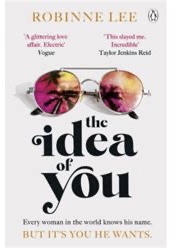
To the media, Hayes Campbell is the enigmatic front-man of a record-breaking boyband.
To his fans, he’s the man of their dreams.
To Solène Marchand, he’s just the pretty face that’s plastered over her teenage daughter’s bedroom wall. Until a chance meeting throws them together . . .
The attraction is instant. The chemistry is electric. The affair is Solène’s secret. But how long can it stay that way?
OK, how am I going to review this book? Well, I’mgoing to tell you that this book had such an impacton me that I read it in under 48 hours. I’m married, have a toddler and have plenty of things to keep me busy but, much like SolèneMarchand, I willingly let a lot of it fall by the wayside so I could fall into ‘The Idea of You‘.
Prior to reading ‘The Idea of You‘, I’d seen the hype and had friends rave about it and the proof that came through my door exclaimed ‘This will keep you up all night!’. Immediately, I was put off – it couldn’t possibly live up to the hype, could it?
For me, ‘The Idea of You‘ far surpassed my expectations although I didn’t really know what I was getting myself into.
A young lad, only seven years older than Solène’sdaughter, takes a shineto the almost forty year old when they meet backstage at a gig. Therewere times when I felt uncomfortable with Hayes’s proximity in age to Solène‘s daughter and some of the comments that were made. However, much like the protagonist herself, I kept returning to his thrall.
In addition to the age difference, there’s also the added complications of a teenage daughter, an ex-husband, millions of adoring fans and the tabloid media. Oh, and social media too.This novel is bang up-to-date with plenty to keep you turning the pages.
In terms of a read that will captivate women of many ages and fulfil a long-held desire that your favourite celebrity might not only look your way but be interested in what he sees, ‘The Idea of You‘ is perfect. There are trips all over the world, yachts, beyond five star hotels, designer clothes as well as deep desire and beautiful people.In addition to the surface stuff, though, there’s something more… there’s a discussion around feminism and sexism as well as the nature of celebrity and the impact it has.
When I wasn’t reading ‘The Idea of You‘, I found myself grinning as though IwasSolène!I couldn’tstop thinking about it andI doubt I’ll be able to stop thinking about it any time soon. I’ve been in touch with lots of my female friends to discuss it with those of us who’d read it – and to tell the ones who hadn’t read it yet to rectify that immediately.
‘The Idea of You‘ is the perfect holiday read. It’s hot, it’s sultry, it’s sexy. There were moments when I was completely caught up in the breathless excitement of what was going on.
Do yourself a favour and read ‘The Idea of You‘. Thank me later 😉
Vic x
PS – I predict a spike in childbirths in the next nine months…
As the Russian Army closes in on the war-torn City, Adolf Hitler and Eva Braun take their own lives. Their bodies are burned and buried in the Reich Chancellery garden, above the Führer’s bunker.
Buenos Aires, 9th January, 2012
Three audacious thieves carry out the biggest safe depository heist in Argentine history, escaping with more than one hundred million dollars’ worth of valuables. Within hours, an encrypted phone call to America triggers a blood-soaked manhunt as the thieves are tracked down, systematically tortured, then murdered.
San Francisco, 18th January, 2012
Senator John Franklin, hailed as the ‘Great Unifier’, secures the Republican Presidential nomination and seems destined for the Oval Office. Despite the sixty-seven year interval and a span of thirteen thousand miles, these events are indelibly linked.
Chief Inspector Nicolas Vargas of the Buenos Aires Police Department and Lieutenant Troy Hembury of the LAPD are sucked into a dark political conspiracy concealing an incredible historical truth stretching from the infamous Berlin bunker to Buenos Aires and to Washington, which threatens the very heart and soul of American democracy.
It’s a delight to be able to share with you an excerpt of ‘The Counterfeit Candidate‘ by Brian Klein today. I’m sure the extract will leave you wanting more. If so, ‘The Counterfeit Candidate‘ is available now.
My thanks to the author and Midas PR for my advanced review copy.
Vic x
According to accepted twentieth century history, on 30th April 1945, Adolf Hitler and Eva Braun said their final goodbyes to a small group of close friends and colleagues who were gathered in a sitting room, deep inside the underground bunker in Berlin. The pair retired to the Führer’s personal study where, a few hours later, they took their own lives. Braun bit down on a wafer-thin glass cyanide ampoule and Hitler shot himself in the right temple, using his own Walther PPK pistol. The bodies were then carried above ground, via the bunker’s emergency exit, and buried in the Reich Chancellery Gardens, after being doused in petrol and set alight.
Thirty-six hours earlier, the couple had married in a simple ceremony, where they declared they were of pure Aryan descent and free of hereditary disease. The only witnesses were the Minister of Propaganda, Joseph Goebbels, Party Secretary, Martin Bormann and the Führer’s personal valet, Heinz Linge. The ceremony was followed by a modest lunch of spaghetti in tomato sauce, one of the Führer’s favourite meals, prepared by his personal chef, Constanze Manziarly.
Hitler was dressed in full Nazi uniform and Braun wore a calf-length black dress, broken up by a print of small white roses around the neckline. The Führer then dictated his last will and testament in which he declared he chose “death over capitulation” and left his vast personal fortune to the Nazi Party.
Three months after the Nazi regime declared unconditional surrender, the victorious political leaders met in the German city of Potsdam, just outside Berlin, for a post-war conference to discuss the new order in Europe. On 17th July 1945, Stalin and Truman sat down for an intimate lunch in one of the small banqueting suites inside the spectacular Cecilienhof Palace.
The only people present were their respective Foreign Secretaries, Molotov and Byrnes, who acted as translators. Truman was astonished when Stalin disclosed that rumours of the discovery of Hitler and Braun’s bodies were fabricated and that a painstaking search, by his Red Army soldiers of the Reich Chancellery grounds, had failed to discover any sign of the Führer’s remains. Stalin was convinced Hitler had escaped his clutches.
Welcome to Hollow's Edge - a picture-perfect neighbourhood where everyone has each other's backs. At least, that's how it used to be, until the night Brandon and Fiona Truett were found dead...
Two years ago, branded a grifter, thief and sociopath by her friends and neighbours, Ruby Fletcher was convicted of murdering the Truetts. Now, freed by mistrial, Ruby has returned to Hollow's Edge. But why would she come back? No one wants her there, least of all her old housemate, Harper Nash.
As Ruby's return sends shockwaves through the community, terrified residents turn on each other, and it soon becomes clear that not everyone was honest about the night the Truetts died. When Harper begins to receive threatening, anonymous notes, she realizes she has to uncover the truth before someone else gets hurt... Someone like her.
'Such a Quiet Place' is a really great read. I found Miranda's description of Hollow's Edge and its surroundings very vivid, reminiscent of Stepford or Wisteria Lane. Although the idea of the perfect neighbourhood hiding some dark secrets may not be new but Megan Miranda has certainly found a new spin to put on it. The way the story - told from Harper's point of view - is interspersed with copies of the private neighbourhood message board is a cool technique to show readers other viewpoints.
The characters felt utterly believable and I really enjoyed trying to guess whether Ruby really was to blame for the Truetts' deaths or if someone else was at fault.
On the face of it, 'Such a Quiet Place' works well as a thriller but it's also, on a deeper level, a study into human nature and how people cope in adverse situations and what they're willing to do to keep their secrets safe.Vic x
Ruth, a teacher, lives in London. She works, she drinks, she falls in love. Her life isn’t simple or straightforward and the news around her, which she eschews, is increasingly bleak.
As her relationship disintegrates, Ruth decides to leave everything behind to travel to the other side of the world, hoping to work with whales in New Zealand. On arrival, however, the news that Ruth has been ignoring has now become inescapable. Away from all she knows and with no hope of survival, Ruth climbs into the mouth of a beached whale with a stranger.
When they emerge, life – and the world – has changed forever.
Thanks to NetGalley and the publisher for providing me with a copy for review.
‘The Stranding‘ isn’t the kind of book I would usually pick up but something about it intrigued me and I was hooked from page one.
Told through dual timelines, we see Ruth trying to create a new life following a catastrophic global event – and the life experiences that brought her to this point. ‘The Stranding’ is beautifully written and is a meditation on family, femininity and reinvention.
I really liked that, although this huge world-altering event happened, Sawyer never delves too deeply into it, simply choosing to allude to certain possibilities. Another great thing about this novel is that it doesn’t stray too far from its focal point: the characters.
Kate Sawyer has created believable, nuanced characters who engage the reader and stay with you beyond the span of the book. I spent the time I wasn’t reading this book thinking about it. I suspect I will spend the rest of my life thinking about parts of this incredible novel. The scene in the airport between Ruth and her parents will stay with me forever.
Overall, ‘The Stranding‘, although terrifying at times, is hopeful and optimistic, championing the triumph of the human spirit against all odds.
Anna James is an anxious mother. So when she has to leave eleven-year-old Harrie home alone one evening, she can't stop worrying about her daughter. But nothing bad ever happens in the sleepy village of Barton St Martin.

Except something goes wrong that night, and Anna returns to find Harrie with bruises she won't explain. The next morning a local businessman is reported missing and the village is sparking with gossip. Harrie is not the girl that was left behind that night, overnight she's turned into an argumentative, troubled girl who refuses to talk to her mum.

Anna is convinced there's a connection and that Harrie is in trouble. But how can she protect her daughter if she doesn't know where the danger is coming from?

In addition to an out-of-character daughter, Anna is also struggling with an MIA husband and two other children as well as money worries. The fact that Anna and her family have had to flee London to escape their financial woes leaves Anna as "the new mum in town".

Lauren North has outdone herself with this intriguing thriller. I completely identified with anxious Anna and sympathised with the situation she found herself in. I thought the inclusion of WhatsApp group chats was a clever device put to good use to suggest that Anna may not be a completely reliable narrator.

The interactions between residents and village-life in general is well-described and adds a lot to the story.

By scattering breadcrumbs of doubt, North leads the reader to the same conclusions as her protagonist. The denouement is pitch perfect. A brilliant read.
Naomi had always wanted to be a mum. But three years ago, her husband left, taking their daughter with him.

Now, her daughter has come to stay, and Naomi knows it's her chance to re-build her family.

But the night ends in a terrible accident. And Naomi has no memory of what happened.

Panicking, desperate, Naomi finds herself telling a lie: 'My daughter is missing.'

From the outset, 'When They Find Her' had me gripped.

This confidently-written debut grabbed me with its utterly unthinkable opening and kept me emotionally invested until the final page.

Lia Middleton's writing is so visceral that, at first, I wasn't sure I could continue to read this book as it felt too uncomfortably close to home for me (as someone with a young child). However, I couldn't leave it alone - I HAD to know how it would end. I was completely swept up in Naomi's nightmare and her split second choice with catastrophic consequences.

'When They Find Her' is perfectly-plotted and intelligently written on a subject which continues to remain taboo: mental health, more specifically the mental health of new mothers. This novel is dark and, at times, uncomfortable to read - this is not, however, a criticism but a testament to Middleton's skill as a writer. She captures the terror of being a new mum and puts it to chilling use. I absolutely identified with Naomi and her fears - and how those fears affected her family.

An absolutely stellar debut.

Vic x
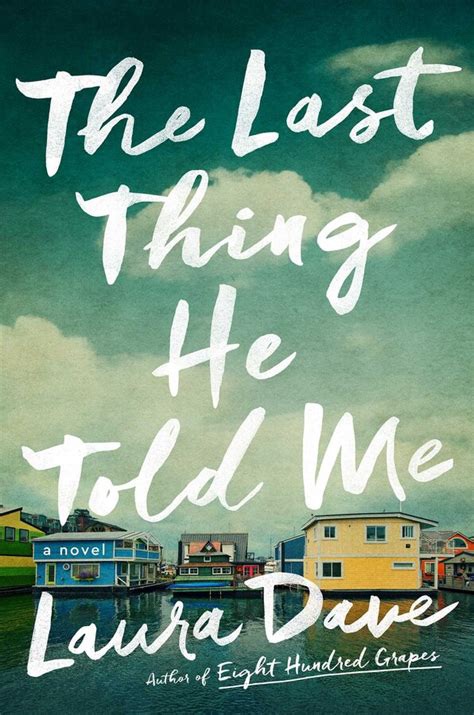
Before Owen Michaels disappears, he manages to smuggle a note to his new wife, Hannah: protect her. Hannah knows exactly who Owen needs her to protect - his sixteen-year-old daughter, Bailey, who lost her mother tragically as a child. And who wants absolutely nothing to do with her new stepmother.
As her increasingly desperate calls to Owen go unanswered, his boss is arrested for fraud and the police start questioning her, Hannah realises that her husband isn't who he said he was. And that Bailey might hold the key to discovering Owen's true identity, and why he disappeared. Together they set out to discover the truth. But as they start putting together the pieces of Owen's past, they soon realise that their lives will never be the same again...
My thanksto the publishers and NetGalley for my advanced copy in exchange for an honest review.
'The Last Thing He Told Me' is domestic suspense of the highest order, it's intense, quick-paced, thoughtful and moving. I was unable to put it down. I'm not surprised itwas a Reese Witherspoon book club pick or that it's going to be produced for TV by the makers of 'Big Little Lies'.
Unlike many other thrillers out there, it manages to be thrilling and comforting - a real trick to pull off. It was actually rather refreshing to read characters that were, generally speaking, decent human beings. I felt like Laura Dave was going against the grain in that respect.
The characters are beautifully imagined, making them truly memorable. Dave manages to create a believable teenager in Bailey and, in Hannah, a woman dropped well and truly in the deep end.
This novel is a meditation on the ties that bind us; trust, love and honesty - and what happens when those values are called into question. Dave's beautiful prose is yet another reason to pick up this novel.





 elementaryvwatson